

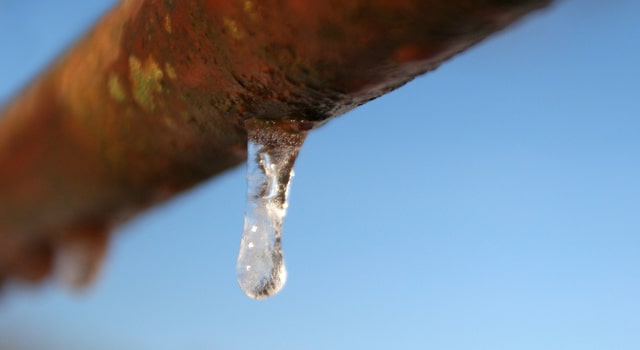
During the cold winter months, water pipes in your home can freeze and burst, resulting in serious property damage. Fortunately, this scenario is avoidable. The steps below show you how to prevent frozen pipes.
Prevention Tips
When the temperature plummets, pipes can freeze. Usually, your home insurance policy will cover damage that results from a burst pipe, but not always. For example, if you turned off your heat before going on vacation, and then your pipes freeze and burst, you may not be covered.
Here’s what you can do as a homeowner to prevent your pipes from freezing.
Insulate Your Pipes
Pipe insulation is a small investment compared to the repair costs of a burst water pipe. The most common kinds of pipe insulation are made from fiberglass or foam, but you can also use heat tape or thermostat-controlled heat cables. These products are available in most home improvement stores.
Be sure to insulate pipes located in unheated areas, such as the attic, basement, crawl spaces or garage. In extremely cold weather, pipes underneath kitchen and bathroom sinks are also prone to freezing.
Maintain a Steady Temperature
Make sure your home is roughly the same temperature during the day and night to prevent overnight freezing. It may raise your heating bill a bit, but it will also save you from the costly repairs and frustration of a ruptured pipe. If you’re heading out of town, set the temperature no lower than 55 degrees.
Keep Faucets Running
One way to keep your pipes from freezing is to let cold water drip from your faucets during especially bitter weather. The movement of the water—even if it’s just a trickle—will help prevent ice blockages from forming in your pipes. Exposed pipes would be the first to freeze, so remember to turn on the faucets they’re connected to first.
Open Cabinet Doors
The plumbing in your home’s central spaces is vulnerable to freezing too. In most homes, the pipes in the kitchen or bathroom are hidden behind a cabinet door. It’s a good idea to open these doors if you’re expecting frigid temperatures outside. This will allow the warm air from inside that room to circulate around the pipes and prevent freezing.
Along these same lines, you should open other interior doors as well. This invites the warm air to spread evenly throughout the entire house, not just within one particular room.
If the Power Goes Out
Winter power outages can easily lead to frozen pipes, especially outages that last multiple days. To prevent your water pipes from freezing during an extended outage, you should drain the water from your plumbing system. Here’s how:
- Shut off the main valve that brings water into your home.
- Starting at the top of your house, open all faucets and flush all toilets several times.
- If you have any outdoor spigots, close the inside shut-off valve that supplies water to it. Then open the spigot to drain the line. Be sure to disconnect the hose too, as outdoor spigots can burst if a hose is connected.
- If you have a hot water tank, you should drain it after three days of below-freezing temperatures. One way is to attach a hose to the tank drain valve and run it to a sump pump or outdoors.
If a Pipe Is Already Frozen
An easy way to see if your water pipes are frozen is to turn on the faucet. If only a drip or trickle of water flows out, you likely have an ice blockage. Your next step is to carefully inspect the section of pipe that you think is frozen.
If there are no cracks or breaks, gently apply heat to the area with a hair dryer or space heater. You can also wrap a heating pad or warm towel around the pipe. Make sure the faucet is still turned on so water can flow through as the ice melts.
Whatever you do, don’t use a blowtorch, kerosene or propane heater, charcoal stove or other open flame devices to thaw a frozen pipe. Open flames pose a serious fire hazard and can easily damage the pipe.
If you’re unable to thaw the ice blockage yourself, call a licensed plumber right away. They will know what do to.
If a Pipe Bursts
If a pipe has burst, turn off the water to the house at the main shut-off valve and immediately call a plumber for assistance. You should also put down a bucket or towel to catch the drips and try to remove as much spilled water as possible. This will mitigate the damage and reduce the chance of mold growth. pipes
Don’t try to thaw a pipe that has already burst, as it can cause water to flow out and flood your home.
Why Do Pipes Freeze
When water freezes, it expands with tremendous force. The pressure inside a pipe may go from 40 pounds per square inch to 40,000. No pipe can hold that much pressure, so it bursts. Interestingly, pipes rarely burst right where the ice has formed. Instead, the ice forces pressure downstream, between the faucet and the ice blockage. This is where pipes usually rupture.
Pipes located in unheated or uninsulated interior areas are at the highest risk of freezing. Basements, attics, garages and crawl spaces are examples of such places. Under the right conditions, pipes that run through kitchen cabinets or exterior walls can also freeze.
NOW LET’S TALK ABOUT YOU
Do you have the right coverage? We’d love to chat with you about it. Call us at 844-235-3604 or speak to a local agent. If you’d rather not talk, you can get an online quote in just 5 seconds.
